Lab journal

News & updates

Research highlights, publications, events and occasional dispatches from the Time Perception Lab.

Lab news · 8/10/2026

A new home for the Time Perception Lab

Welcome to our new website! After ten years online, the Time Perception Lab has moved to a new platform and undergone a much-needed redesign. Our web address has recently changed too: you can now find us at manchestertimelab.com (previously timelabmanchester.com). We've also made the site easier to navigate and given it a fresh appearance, while retaining our original TLM logo, designed by former PhD student Emily Williams.

More importantly, we've substantially expanded the information available about our research. The new Research page provides an overview of the work undertaken in the lab over the past decade, including internal-clock mechanisms, retrospective timing, sensory influences on duration judgements, and our collaborations investigating music and time. Our ESRC-funded project examining time perception in autism also has its own dedicated page, and we'll be adding details of new research projects as they develop.

We've updated the lab members' profiles, made the publications list searchable, and introduced a new Time Lab in the Media page, featuring links to interviews, podcasts and press coverage. We've also restored our news archive all the way back to 2016. Looking through those early posts has been a rather enjoyable reminder of the people, projects and events that have shaped the lab over the years.

We hope you find the new site useful. We'll continue to update it with research findings, publications and other developments. As always, please do get in touch if you're interested in our work.

Luke Jones
Back to top ↑
Lab news · 26/3/2026

Spring 2026

The hectic teaching period of the year is starting to ease off a little, so time for an update.

Our PhD student Renee passed her first year continuation report with no problems and is now finishing off her first tranch of experimental work on retrospective timing; which is now being written up for paper submission. 

The lab is due to move back to our permenant location back to the Zochonis building, from our current temporary home in Booth Street East. In preparation for this we are doing an audit and general clear out of equipment. It's amazing just how much stuff a lab accumulates after over twenty years! But there is always a bit of sad nostalgia as you go through it all, remembering past projects and people.

On the media from I (Luke Jones) have recently given an interview to National Geographic on how are relationship with time is changing due to modern culture and technology. This seems to be a hot topic at the moment. The article is not out yet ; lead times in magazine publishing are widely long!

After the Easter break to focus of the lab will be on publications, we are sat on a lot of data from multi-experiment work that now need to be finalised and submitted. We are also working on a grant application using VR to explore various ecological based questions.

That's it for now.
Back to top ↑
Lab news · 13/8/2025

Summer 2025

Hello,

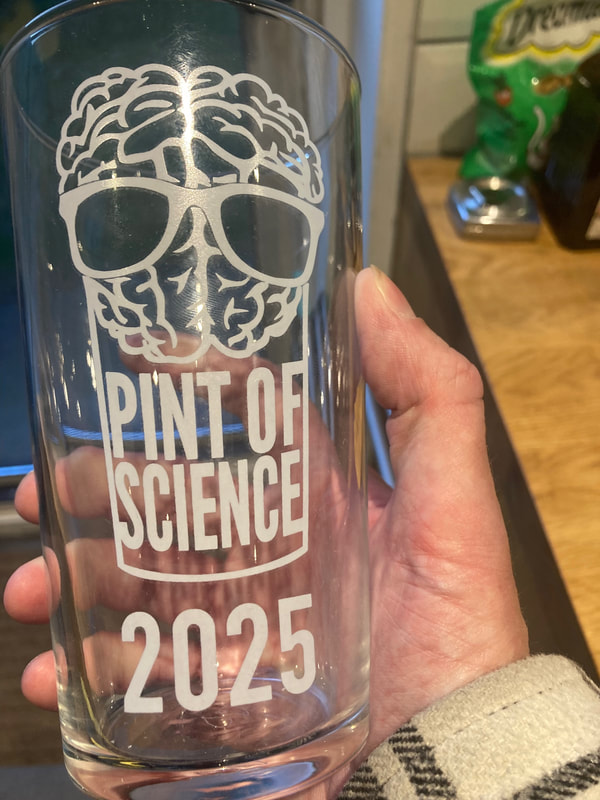
I hope you are having a good summer wherever you are. A few updates since our last post. As mentioned previously I was invited to give a talk at the Pint of Science festival. The Manchester one was hosted at Cloudwater Brewery, and it was great fun. First time I have ever given a talk while enjoying a pint of beer! As usual the questions from the general public were intriguing and set off some interesting discussions and ideas. Many thanks to the organisers for inviting me, and for the excellent pint glass that they gave me (see below).
Summer 2025
Other happenings, my third year project students all completed their dissertations, the standard of their project work this year was exceptionally high and their results examining the relationship between time processing and reaction time will be submitted to a journal soon. Also in our lab, Ruoyu our PhD student has just written up her first year's work into her continuation report and is now preparing for her end of year viva. She is currently working on a systematic review of retrospective timing and has collected a huge data set looking at the degree to which retrospective timing involves internal clock processes. Ruoyu's enthusiasm is infectious and she is an excellent member of our team. On the Master's front my student Puhan Hou is currently analysing his data on multi-modal retrospective timing, a first pass of the data has already revealed some fascinating patterns - stay tuned for more later. That's about it for now, I am currently writing up papers and preparing projects and teaching materials for the new academic year - which as usual will come round quicker than ever! All the best, Luke.
Back to top ↑
Lab news · 28/3/2025

Spring 2025

Hi All,

Yet another long overdue update. 2025 started off with a visit to the Experimental Psychology Society conference at University College London. This was a chance for our new PhD Student ​Ruoyu Zhang to attend her first conference, and I (Luke) went along too. We also were accompanied by Dr Emily Williams who is a past PhD student of the time lab who now is now working as a Postdoctoral Researcher at the University of Leeds.

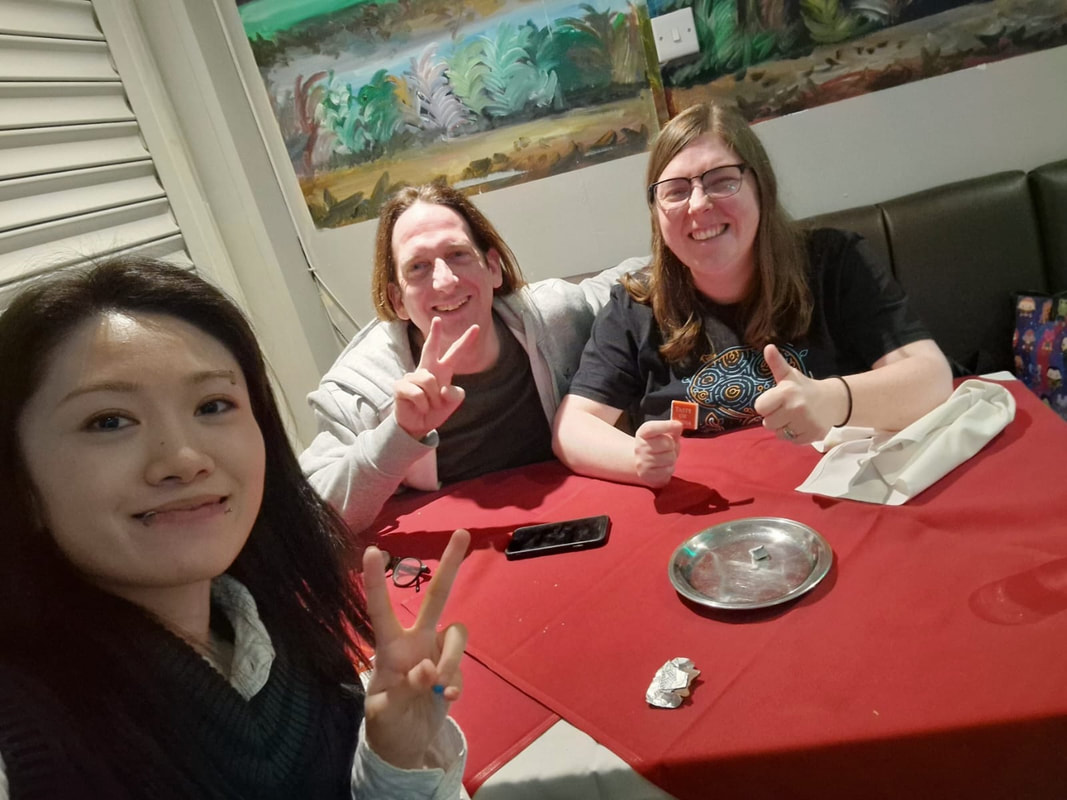
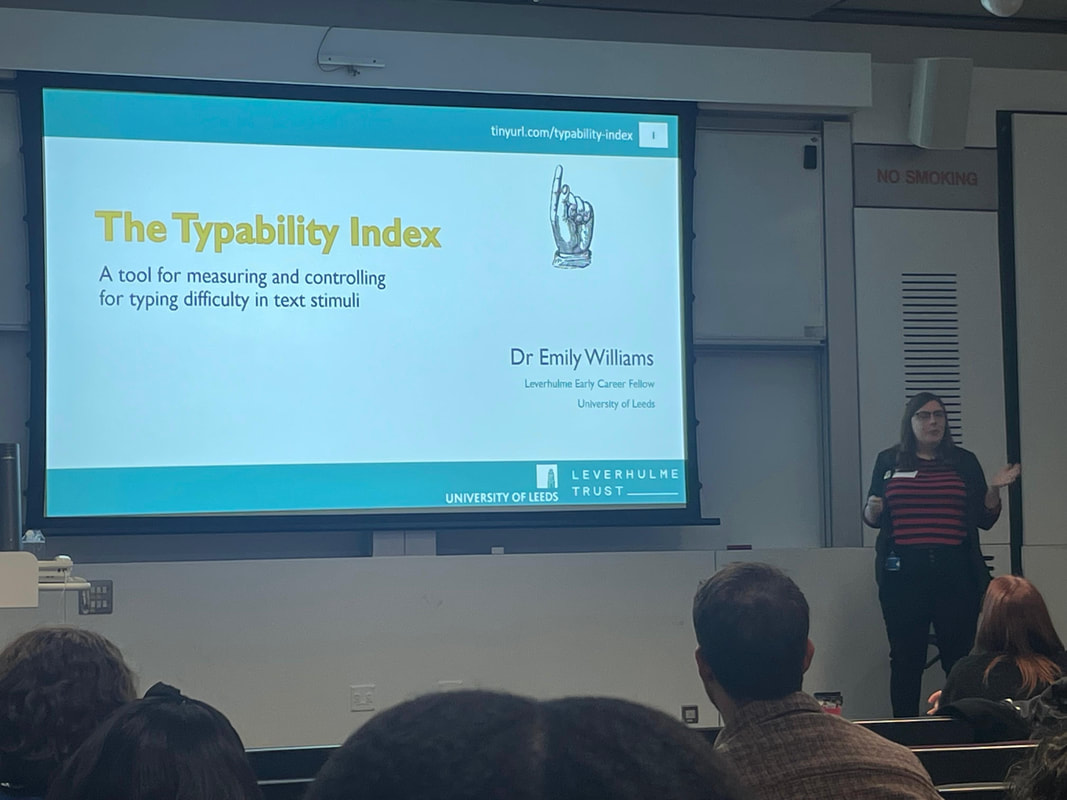
We attended some excellent talks (including one by Emily -see photos below), had a very mediocre curry (we are spoilt in Manchester!) and brainstormed ideas as well as exchanging the usual academic gossip. 

The spring semester is my busiest for teaching so that has taken a lot of my attention recently, plus my 3rd year project students are currently writing up their dissertations, and they appear to have found some interesting results. They have been investigating the effect of repetitive stimulation on reaction time in a gaming like context, more details to come in future.

In outreach work I have recently given an interview to the New York Times, the article comes out next month and I will link to it on here when it does so. I have also been invited to give a talk at the Pint Of Science series of talks which I am looking forward to immensely - its always fun and informative to get ideas and questions from the wider community outside of the academic bubble.


​
Spring 2025
At the curry house ( Ruoyu, Luke and Emily)
Spring 2025
Dr Emily Willams presenting at the EPS London January  2025
Back to top ↑
Lab news · 25/9/2024

9th October 2024

Yes I know its been some time since the last update. In our defense there has been a lot of reorganisation and changes at the university, including moving my office and the lab to a new building! We are now based in the Booth Street West building, for at least 18 months-2 years. So apologies, we've been somewhat preoccupied.

OK first bit of exciting news is that we have a new member in our research team Ms Ruoyu Zhang (also known as Renee). Renee has recently completed a MRes with our lab and has now started on a 3-year PhD program researching Retrospective Timing. You can find Renee's details and background on our members page.

In other exciting news we currently have a funded (MRC DTP) PhD opportunity for a project aiming to understand how stress influences time perception. This PhD would be supervised by myself (Dr Luke Jones) and Dr Nils Muhlert. The deadline for application is the 15th November and details can be found here.
Back to top ↑
Lab news · 18/8/2023

August 18th, 2023

Hello,
I hope your summer is going well, wherever you are. We have just given our publications and members pages a much needed update..where does the time go?...Perhaps someone should investigate. Anyway, as you will see we are continuing to publish data from our time and autism project and we still have more in the pipeline. In addition, our current Master's student is currently analysing some potentially exciting data that may provide some crucial insights into the filled-duration illusion: the illusion that filled durations are time, (such as a tone) as perceived as being longer than empty durations of time (such as a period of silence). This effect has been known about for well over a hundred years, but it was only in recent years that it was discovered that the effect is multiplicative, in other words the discrepancy between the estimation of the filled and empty periods increases as their duration increases. This is mathematically consistent with an increase in the rate of something and has lead people to conclude that the internal clock speed is faster for filled duration than empty ones.  Although why this should be remains a mystery, and there are other potential explanations and issues that I will leave to a future paper! If you are interested in this effect the key references on it are:

Wearden, J. H., Norton, R., Martin, S., & Montford-Bebb, O. (2007). Internal clock processes and the filled-duration illusion. Journal of Experimental Psychology: Human Perception and Performance, 33(3), 716–729.

Wearden, J. H., & Ogden, R. S. (2021). Filled-Duration Illusions. Timing & Time Perception, 10(2), 97-121.

The new academic year is looming in the distance, so the next order of business is to decide on the next set of undergraduate and postgraduate research projects.

Enjoy the rest of the summer.

Luke Jones


Back to top ↑
Lab news · 18/5/2023

18th May 2023

Yes, as usual our update starts with an apology for how long it's been since the last one!

On the publication front our paper on simultaneity judgments in people with autism has now been accepted for publication in the Quarterly Journal of Experimental Psychology, Many thanks to Daniel Poole for his hard work on both the design and data collection but also for the main bulk of the paper writing.

Speaking of Dan, he has just started a lectureship position at the University of Sheffield, so congratulations to him. We are extremely grateful for all the hard work he has done with our lab (and others), and especially for all his work as our postdoctoral researcher on our ESRC grant investigating time perception in autism. We will continue to work with Dan as we still have remaining data coming out of that grant work to write up and build on.

On a less positive note we were saddened to hear of the passing of Michel Treisman recently. Treisman was one of the original creators of internal clock theory, his model leading directly to the work of Gibbon, Church and Meck in developing Scalar Expectancy Theory. There was an obituary in the Guardian here. I (Luke) met him at a conference I attended just before starting my PhD (a million years ago in 1999!), when the depth of my ignorance was only matched by my naive enthusiasm for the subject area. He gave an excellent talk that was interesting, enthusiastic and most of all clear to a non-expert (me) member of the audience. He was also very humble about the legacy of his work.

We have a lot of work coming out of the lab, so the summer will be spent paper writing. We have some interesting findings from projects on retrospective timing, the modality effect, manipulations of stimulus intensity, the filled duration illusion and motor timing in autism. So I'd better stop writing this blog and get on with it! All the best, Luke Jones.
 

Back to top ↑
Lab news · 1/11/2022

1st November 2022

Time for a lab news update. Lots happening at the moment. Firstly we have another couple of papers at various stages of review from our work on timing in autism. The ESRC grant came to an end some time ago, but we are still working through the large data set. One of the studies involved participants completing simultaneity judgements of audiovisual speech stimuli at a range of stimulus onset asynchronies. As with our previous paper on interval and event timing we found no significant difference between the perfomance of our participants with autism and the control group.

This month we have welcomed a new member to our research team Ms Sadie Mayo. Sadie has just started on the MRes and will be working on the filled-duration illusion for her dissertation. Our current MRes student Ms Yuxi Fu has just finished her studies, her dissertation also explored the filled-duration and the effect of delay and order. This work will form the basis of a journal article at some point in the near future. Thank you for your hard work Yuxi and good luck in your future studies!

Lastly I (Luke Jones) have continued to give interviews to the media about the distortion of time during COVID-19 and the associated lockdowns. The latest was for Philidelphia Magazine and you can find it here.
Back to top ↑
Lab news · 4/5/2022

4th May 2022

Hi All,

Time for another news round up. There has been lot's happening from the lab recently. Firstly a couple of key publications of ours have come out. The first of these is a major output from our three year ESRC funded investigation into time perception in autism. You can find the paper here. In this paper we report the results from a wide range of psychophysical tasks that explored timing and time perception across a whole spectrum of abilities. In short we found no significant difference between the performance of adults with autism and our nonautisic participants. That is not to say that people with autism do not report problems ‘with time’, but these problems appear to be to do with higher order concepts of time, planning, and time management. We have captured some of these problems in our large survey of parents of children with autism which you can find here.
 
Our second recent publication is a paper on the work of the late great Warren Meck who sadly passed away in January 2020. In this paper we explore Meck’s early work on temporal reference memory (the long term memory store for duration) and track some of the later developments. This aspect of Warren’s work is often overlooked by modern time perception researchers so it gave us great pleasure to bring it to the fore again.

On a personal level I (Luke Jones) followed on from Meck’s work when researching for my own PhD which was on temporal reference memory, so at the time I read pretty much everything he had published. Years later I met him at several conferences and I found him to be incredibly passionate about the subject and very encouraging and interested in other people’s ideas. He was a very generous and friendly soul, we hung out together at a rather odd conference in Vienna one year, he was on before me and joked that he was the warm up act for me. He was also amused that I enjoyed looking around the Necropolis in Vienna, when I showed him some photos of some of the statues I had taken he exclaimed to the room “Look, Luke has thing for dead chicks!” He was a colossus in the field and is missed by all who worked with or met him.

Lastly we attended the EPS workshop organised by Dr Ruth Ogden at Liverpool John Moores University. The topic of the workshop was 'Understanding real-world distortions to time: Who, What, Why and When? This was a small group focussed workshop and there were a range of fascinating presentations  by Ruth, Dr Joanna Witowska, Prof Chris Hoerl and Prof Teresa McCormack, Prof Marc Wittmann, myself (Dr Luke Jones), Dr Daniel Poole, Prof Sylvie Droit-Volet, and finally Prof John Wearden. It was an excellent meeting and we are working on a joint publication on the topic of passage of time judgements. Many thanks to Ruth for organising it.


Back to top ↑
Lab news · 28/1/2022

January 28th, 2022


Hi All, and a belated Happy New Year!

Graduating Time Lab Members

It has been too many months since our last update, like most labs and academics we have been flying by the seat of our pants for the last two years. Through all of the difficulties one of the saddest has been the lack of opportunity to celebrate the success of our students, as all our graduations have been cancelled. On that front I would like to start our news round up by extending our congratulations to Dr Martin Casassus who submitted his thesis and successfully passed his PhD viva exam last year. Martin's work was examining time perception in people with autism. We would like to thank Dr Catherine Jones (University of Cardiff) and Dr Jason Taylor (University of Manchester) for serving as Martin's external and internal examiners. The viva was conducted on zoom, and sadly there was no opportunity for celebratory drinks afterwards. although Martin and I (Luke) did manage to stay within the Covid rules at the time and have a few beers in the rain in my garden!

Martin is now working as a lecturer and researcher at the Universidad Autónoma in Chile. We will miss Martin, but are still working together publishing the remaining work from his thesis and we hope to work on new projects together in the future.

In other news we would also like to congratulate Ms Georgia Dunning who completed her masters' project in our lab. Georgia graduated with a distinction and top of her class. She has recently published her first paper on her experience during her placement in the neuropsychology department at Salford Royal Hospital. You can read her paper here.

New Time Lab Publications

On the paper front, publications from our 3-year ESRC funded project on timing in autism are now starting to come out. The following are available or in press and we have more in the pipeline:

Poole, D., Gowen, E., Poliakoff, E., & Jones, L. A. (2021). ‘No idea of time’: Parents report differences in autistic children’s behaviour relating to time in a mixed-methods study. Autism, 13623613211010014.

Poole, D., Casassus, M., Gowen, E., Poliakoff, E., & Jones, L. A. (in press). Time perception in autistic adults: Duration and relative timing judgements do not differ from non-autistics. Journal of Experimental Psychology: General.

Media Work

Dr Luke Jones was interviewed for USA today and the Courier Journal about how the perception of time has been altered by Covid-19 and the associated lockdowns and social restrictions. You can read the article here.

That's it for now, hopefully we will get back to more regular updates this year. Take care everyone.


Back to top ↑
Lab news · 23/7/2021

Time and Autism Webinar - Friday 23rd July

Hi All,

We are very excited for our upcoming webinar about time and autism, which will include reporting some of the results from our 3 year ESRC funded investigation of the subject. You can find all the details on this page of our website. Anyone is welcome to come and join us. The whole event will be broadcast on youtube live here. We are particularly interested in your questions, comments and experiences, and what questions about time we might be missing.

Hope to see you there!
Luke Jones
Back to top ↑

From the archives: 2016–2021

Earlier reports on lab research, publications, conferences, public engagement and people. Select a year to read its posts.

20212 posts
Archive · 20 April 2021

News round up.. April 2021

Hello to all our readers, just a quick post to update on what has been happening since our last update in January. Obviously a lot of time has been taken up with lecture recording and moving testing to online. In fact online testing, although not suitable for every experiment, is proving to be a very efficient and powerful way of collecting data, and so far the data seems to be just as orderly...or disorderly!

On the paper front the first of several that we have 'in press' has been published. We have an article in Timing & Time Perception on the judgements of auditory and visual stimuli. In this paper we review the overall state of play of studies in this area, and draw conclusions about which of the widely reported effects seem consistent and which do not: Wearden, J. H., & Jones, L. A. (2021). Judgements of the Duration of Auditory and Visual Stimuli. Timing & Time Perception, 9(2), 199–224.

I (Luke Jones) gave an interview to the BBC on time in lockdown, broadcast as part of the 'Unusual Times' podcast. Lastly, our lab's third-year students conducted a fascinating experiment comparing the timing of visual and auditory stimuli in retrospective and prospective timing conditions. This is a highly novel experiment and the data are looking interesting, so watch this space!

That's all for now; hope you are all keeping safe.

Back to 2021 ↑
Archive · 28 January 2021

January 2021: news update

Happy New Year! Welcome to what seems like the longest January in history. Indeed I (Luke) have given several media interviews discussing the distortion of time during lockdown, including an interview with Vice magazine.

It has been six months since our last update. In that time we have been working 100% from home and currently still are. Despite the vaccination rollout we don't anticipate being back on campus until at least the summer. Along with most research labs we have had to move our testing online, and combined with recording all our lecture content it has been a demanding time. You can find videos for our third-year time-perception course on our YouTube channel.

On the publications front we have a new, open-access paper on judgements of auditory and visual stimuli and how they differ (and may be more similar in some ways than has been supposed). We have several other papers under review or revision which we hope to report on soon.

In October we were pleased to welcome Georgia Dunning, who joined us as a master's student examining motor timing in people with autism. Lastly we were sad to say goodbye to visiting intern Joanna Witowska. Joanna joined us on a six-month funded internship in March, two weeks before the first national lockdown. Her planned work on time in virtual reality had to be cancelled; instead she contributed to research on time and music as part of our collaboration with the Royal Northern College of Music. I'm pleased to report that Joanna recently passed her PhD defence upon her return to Poland. Congratulations Dr Joanna Witowska!

Till our next update, I hope you are all staying safe and looking after each other.

Back to 2021 ↑
20202 posts
Archive · 18 June 2020

June 2020: News Round-Up

Hi All. Firstly I hope that all the students, staff and visitors to our website are healthy and well. People have been going through difficult times with coronavirus, lockdown and all the associated chaos, disruption and stress.

Our lab (and the University) closed very rapidly a week before the UK lockdown, so for three months we have been unable to collect data. The lab and most University buildings will remain closed until autumn at the earliest, and probably into the new year. Luckily our third-year project students had just finished collecting data, and collection of the large data set for our study on timing in autism had also finished, so we have plenty to analyse.

In late January we were saddened by the passing of Professor Warren Meck. Warren was one of the original architects of Scalar Expectancy Theory and modern internal-clock theory. I (Luke) had the pleasure of meeting and spending time with him. My PhD was based on his work on temporal reference memory, so his death is an emotional hit on several levels. Our thoughts go out to his wife, family, and everyone who knew him: he was warm and generous, with boundless passion for the subject.

On Sunday 23 February Dr Luke Jones was interviewed live on The Naked Scientists, broadcast on BBC Radio 5 Live and BBC Radio Cambridgeshire, answering questions on how the experience of time passing changes with age and in different social situations.

During lockdown we have had two journal papers accepted. The first, led by our postdoctoral researcher Dr Dan Poole and involving third-year student Kyle Lees, investigates repetitive auditory stimulation (click trains) and temporal order judgements. Congratulations to Kyle on his first publication. The second is a collaboration with the Royal Northern College of Music (RNCM) studying perception of segmentation in music. Both papers are open access and we have more time-and-music research underway.

Lastly, and by no means least, our PhD student Martin Casassus passed his viva voce examination this week. Huge congratulations to him and thanks to his examiners, Dr Jason Taylor and Dr Catherine Jones.

Stay safe and look after each other.

Back to 2020 ↑
Archive · 27 February 2020

Experimental Psychology Society: London Meeting - Martin Casassus Presents

January 8–10, 2020 saw the Experimental Psychology Society conference at University College London. The society meets three times a year at different locations; its January meeting is always held in London.

Martin Casassus, our PhD student, presented an oral paper on his research into timing in autism, covering both low-level perceptual timing and higher-order timing processes. Giving an EPS talk has become a rite of passage for any experimental psychologist, and Martin gave an excellent presentation. The abstract was available through the Experimental Psychology Society.

Martin Casassus, Time Lab PhD student
Back to 2020 ↑
20193 posts
Archive · 10 October 2019

Royal Musical Association ANNUAL CONFERENCE

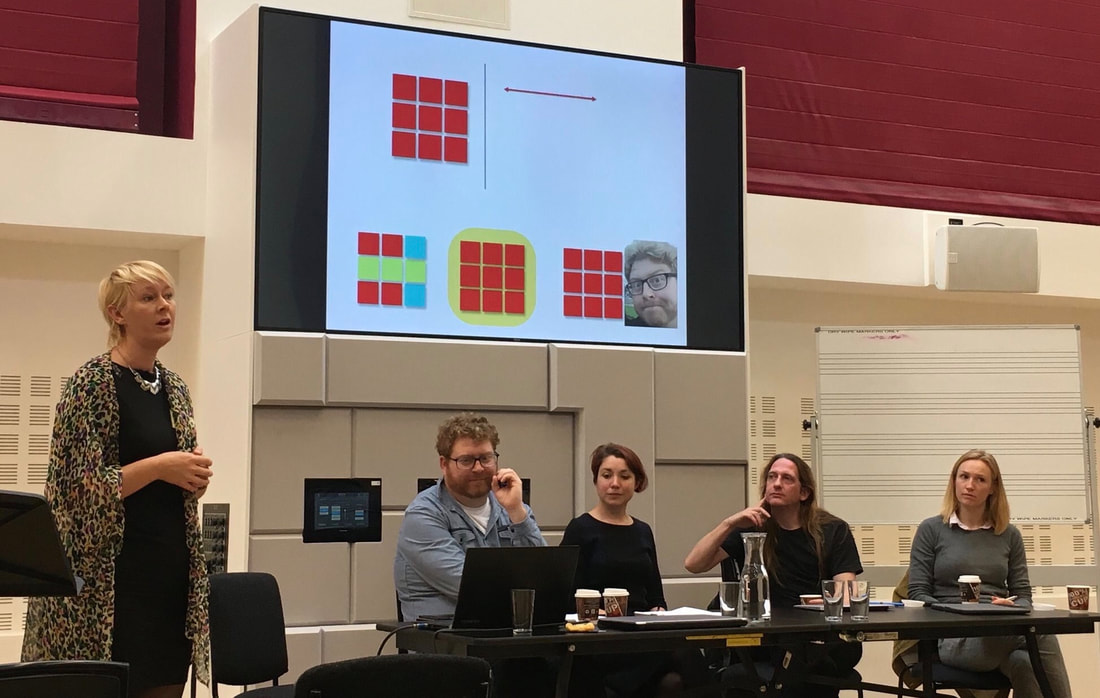
Dr Luke Jones was an invited member of a round-table panel at the 55th Annual Conference of the Royal Musical Association, held at the Royal Northern College of Music on 11–13 September 2019. The session theme was 'Music and Time: Psychology, Philosophy and Practice'.

The panel was chaired by Dr Michelle Phillips (RNCM). Other participants included Abigail Conner (Philosophy, University of Manchester), Dr Lauren Redhead (Goldsmiths), Dr Matthew Sergeant (Bath Spa University) and Dr Joel Smith (University of Manchester).

Panel members reflected on memory, duration, the present, the subjective and the objective before opening the discussion to questions from the audience. Members of the panel were working on a book, Music and Time: Psychology, Philosophy and Practice, for Boydell & Brewer.

Round-table discussion at the Royal Musical Association conference
Back to 2019 ↑
Archive · 6 August 2019

Summer 2019

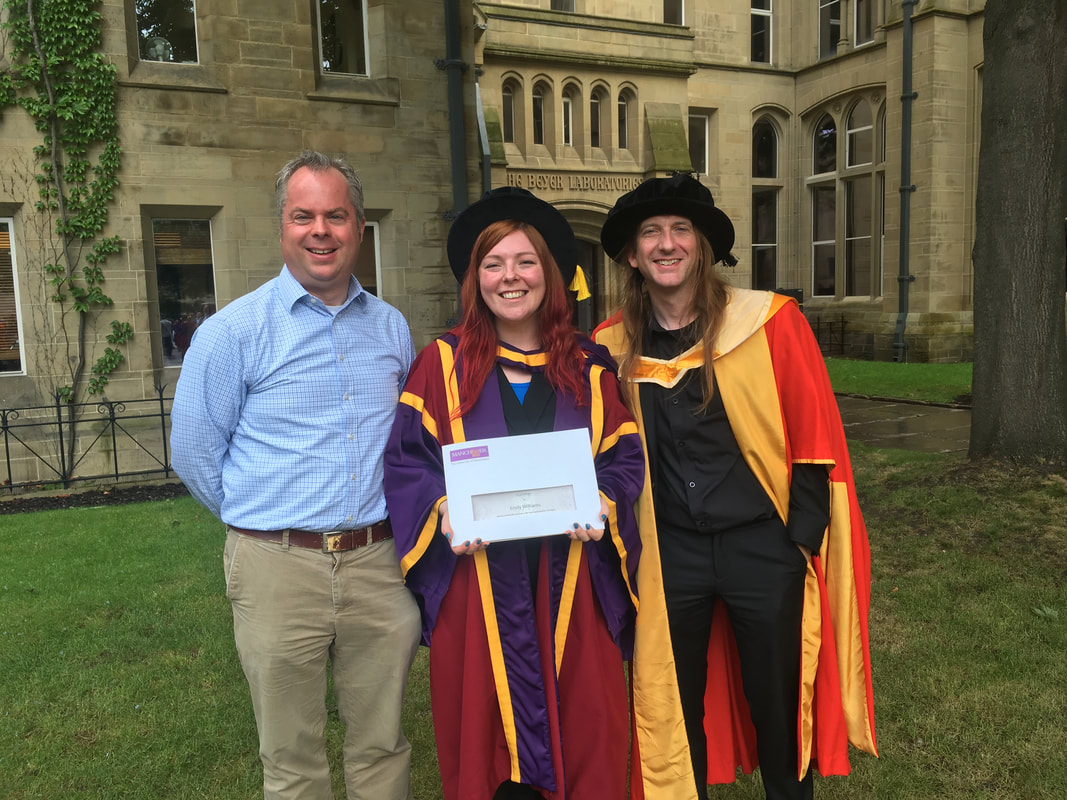
The second semester of 2019 was a hectic one; here is a catch-up. In February our PhD student Emily Williams passed her viva voce and became Dr Emily Williams. Her graduation was in July, with her two supervisors Dr Luke Jones and Dr Andrew Stewart. It was a very proud day, tinged with sadness: Emily has been a major force in the lab and school over the five years from her undergraduate dissertation, through MRes, to funded PhD. We are still writing papers together, and she will always be part of our lab. Thank you for everything, Emily.

In April The University of Manchester hosted the spring Experimental Psychology Society meeting. Our lab was well represented. Emily gave her first EPS oral presentation on temporal difference thresholds and repetitive stimulation, as well as a poster on repetitive stimulation and physiological arousal.

The first paper from our three-year ESRC-funded timing-and-autism project has been published. It is a systematic review of time-perception studies in autism, undertaken with colleagues in autism research at Manchester and forming part of Martin Casassus's thesis. Although difficulties with 'time' are often reported by autistic people and their families, it is not yet clear which timing abilities are affected. Evidence for deficits in fundamental stimulus timing is unconvincing; evidence is somewhat stronger for complex timing tasks. Addressing these issues is central to our ESRC project, and we expect empirical papers over the coming year.

Over the summer we are writing papers and looking forward to the first batch of data from our preregistered large-scale study of timing performance in people with autism. We are aiming for strong open-science practice in these projects.

We end on sad news: Dr Don O'Boyle, formerly a lecturer here until 2003 and a researcher interested in timing (including in Parkinson's disease), died after a long illness. Don was a co-supervisor of my (Luke's) PhD and showed me great kindness and patience when I first arrived in Manchester. Rest in peace, Don; our thoughts are with his family and friends.

Emily Williams celebrating graduation with Luke Jones and Andrew Stewart
Back to 2019 ↑
Archive · 14 February 2019

Congratulations to Emily!

Emily Williams, our PhD student, passed her viva examination on 18 January. Her external examiner was Dr William Skylark (Cambridge) and her internal examiner was Dr Jason Taylor (Manchester), and we thank them for their time.

According to the examiners' report Emily performed brilliantly; they were so interested in her research that the viva lasted almost three hours (somewhat stressful for her supervisor, pacing outside – me, Luke Jones!). Emily will graduate in July. She has already started postdoctoral research in Leeds.

Thank you to everyone who helped and supported Emily during her PhD, and especially to Dr Andrew Stewart, her co-supervisor.

Back to 2019 ↑
20184 posts
Archive · 21 December 2018

Exciting News for Emily

Hi everyone, Emily here, writing a guest blog post about recent developments. In the past few months I have submitted my PhD thesis, started a postdoc and had my first first-author paper published online!

My thesis, Investigating the Pacemaker Component of the Human Timing System, presents three original works testing the pacemaker explanation of timing associated with Scalar Timing Theory. I am looking forward to discussing this work in my viva in January, and hope to graduate in July 2019.

In September I began work as a Postdoctoral Research Fellow at the University of Leeds on the Helping Handwriting Shine programme, a large randomised controlled trial of a handwriting intervention. My earlier outreach and widening participation work inspired my interest in raising the educational attainment of young learners. I was interested in this post because the intervention aims to free up the cognitive resources of pupils whose handwriting is slow and effortful.

Finally, the first paper from my PhD has been published in Attention, Perception, & Psychophysics: Modality Differences in Timing and the Filled-Duration Illusion: Testing the Pacemaker Rate Explanation.

I look forward to continuing to work with Time Lab Manchester as an external collaborator. — Emily A. Williams

Back to 2018 ↑
Archive · 20 July 2018

Congratualations and Farewell to Hailey

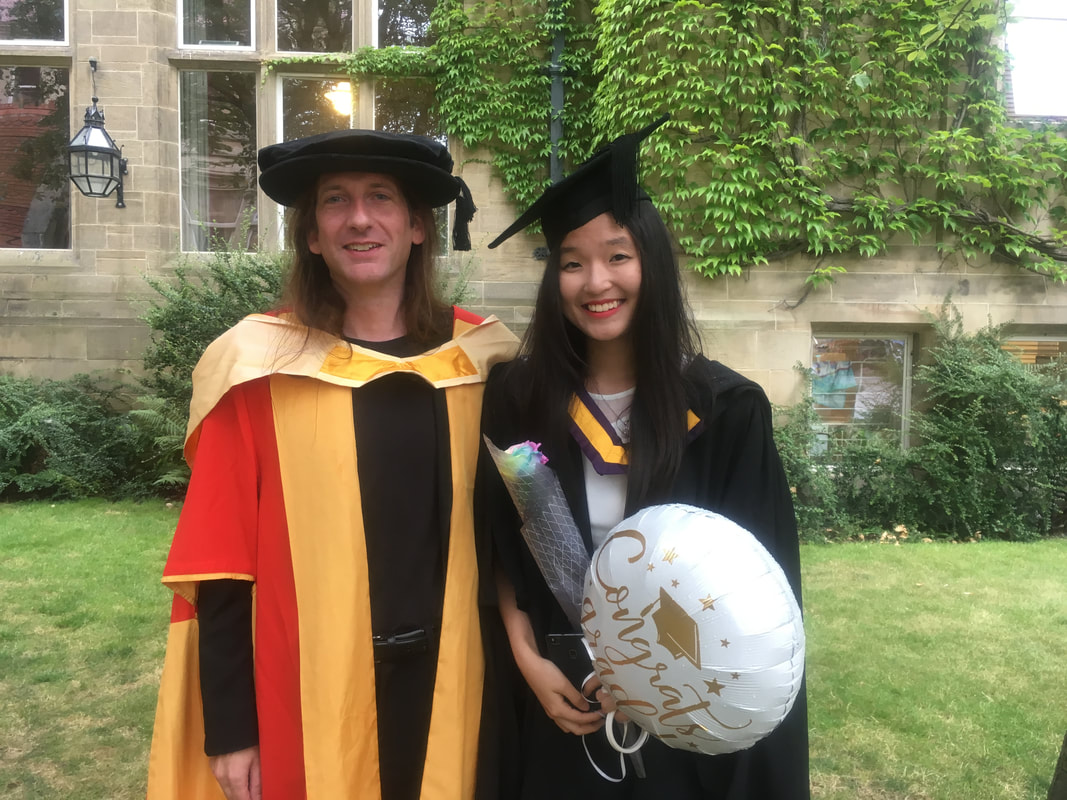
Today was a mixture of celebration and sadness as our team member Hailey (Hui Wen Chong) graduated from her MSci Biology with a first-class mark. Hailey returns to Singapore tomorrow and starts a new job in September.

We thank Hailey for all her hard work over the past two years, and for being such a fun and professional member of the Time Lab. We wish her good luck and will miss her!

Hailey celebrating graduation with members of the lab
Back to 2018 ↑
Archive · 6 June 2018

Emily to present poster at IMRF

Emily will attend the International Multisensory Research Forum in Toronto, 14–17 June. She is presenting a poster, 'Examining Modality Differences in Timing to Test the Pacemaker Explanation', summarising our submitted paper Modality Differences in Timing and the Filled-Duration Illusion: Testing the Pacemaker Rate Explanation.

Emily's poster is in Poster Session 2 on 16 June, 3:15–4:45 pm, at Poster 2.84. Download the IMRF poster (PDF).

Back to 2018 ↑
Archive · 27 April 2018

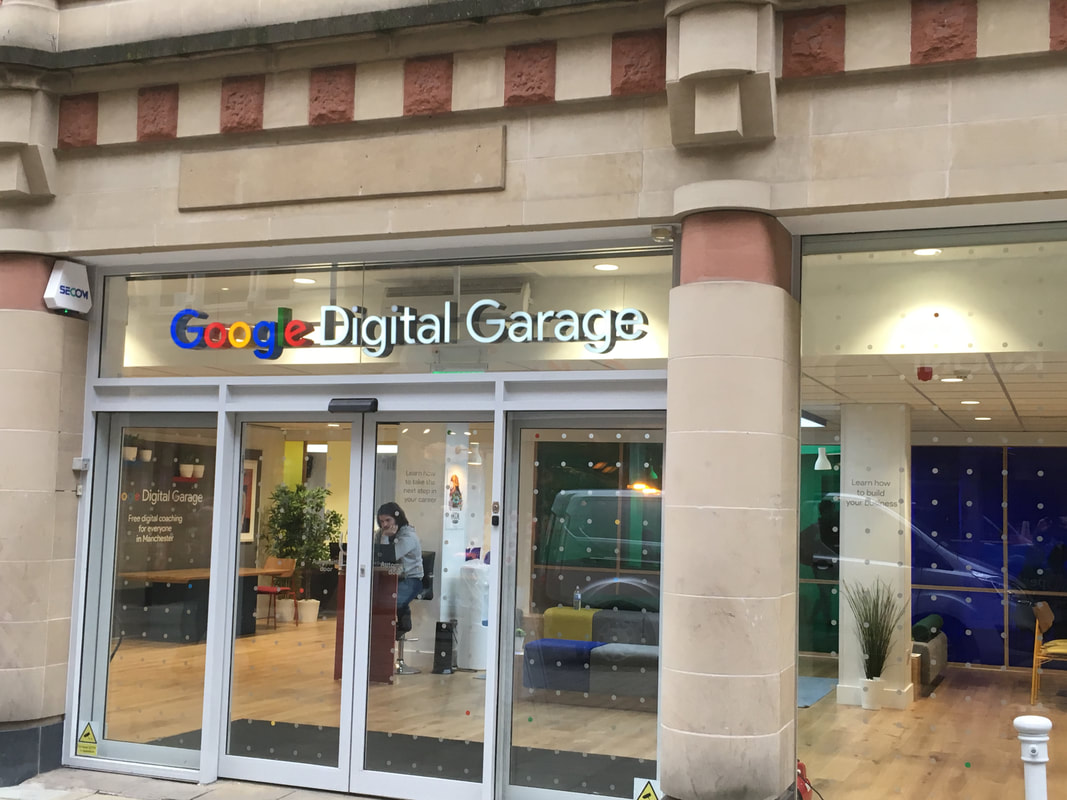
What's Time? Public Engagement Event At Google Digital Garage

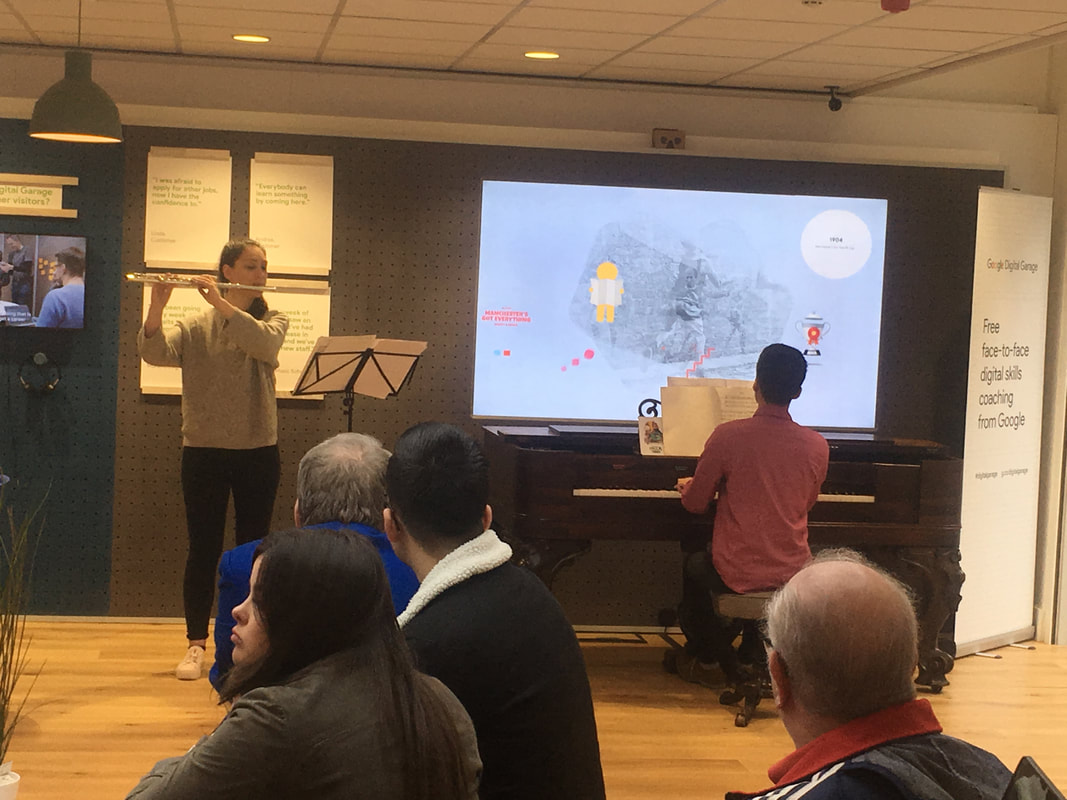
On Tuesday 10 April, members of the Time Lab attended the 'What's Time?' event at Google Digital Garage in Manchester. The event was organised by the Institute of Physics in conjunction with the Royal Northern College of Music (RNCM), Manchester Time Lab and Google.

The evening started with two musicians from RNCM, a pianist and a flautist, playing four very different pieces of music. The pianist used the Google Manchester Piano, which displays a different image of Manchester depending on which note is played. Audience members were asked which piece of music they thought lasted longest. Dr Michelle Phillips of RNCM then discussed time and music, including the properties of a piece of music and of the listener that influence perceived duration.

Dr Luke Jones gave a general introduction to time perception followed by questions and answers. Finally Dr Hannah Renshaw from the Institute of Physics gave a talk on the physics of time.

The event also included two public experiments: one investigated the perception of the duration of different types of music, the other people's mental imagery for time. We are grateful to PhD student Emily Williams for helping run the experiments on a very busy evening.

Many thanks to everyone who attended and to all the organisers and hosts at Google.

Public engagement at Google Digital Garage, Manchester
Back to 2018 ↑
20179 posts
Archive · 19 October 2017

Emily and martin to present posters at trf

Our PhD students Emily Williams and Martin Casassus are travelling to the first Timing Research Forum conference in Strasbourg to present their research. Emily's poster, 'Modality Differences in Timing: Testing the Pacemaker Speed Explanation', will be presented on Tuesday, 4:45–6:15 pm. Martin's poster, 'Time Perception and Autistic Spectrum Condition: A Systematic Review', will be presented on Monday, 5:30–7:00 pm.

Download Emily's Timing Research Forum poster (PDF). Download the Strasbourg poster (PDF).

Back to 2017 ↑
Archive · 3 October 2017

Welcome to MS Hui Weng Chong our latest lab member

A warm welcome to Ms Hui Weng Chong (Hailey), who has joined our lab. Hui Wen is a final-year MSci Biology student at the University of Manchester, supervised by Dr Luke Jones.

Hui Wen has experience across several biological research disciplines. In 2015 she assisted Professor Wong's Pathology Lab at University Malaya Medical Centre with work including Alzheimer's disease and Japanese encephalitis. She later worked in Professor Takano's lab on the 'AlcoPatch' sweat alcohol biosensor as part of the 2016 International Genetically Engineered Machine (iGEM) competition.

She has also published on genetic polymorphisms associated with schizophrenia using bioinformatics. Her current main interest is time perception and the effects of sensory modality on duration judgements in working memory.

Hui Wen Chong (Hailey)
Back to 2017 ↑
Archive · 16 August 2017

Our Postgraduate Jessica Henderson to Take RA post at Liverpool John Moore's University

Congratulations to our postgraduate lab member Jessica Henderson, who has been employed as a research assistant at Liverpool John Moores University.

The project examines sympathetic and parasympathetic activity and their effects on time perception. Specifically, it asks whether sympathetic activity induced by stress leads to overestimation on a timing task, and whether parasympathetic activity induced by mindfulness attenuates that effect. The research is funded by the Bial Foundation and led by Dr Ruth Ogden.

Jessica is currently completing an MRes in Psychology supervised by Dr Luke Jones.

Jessica Henderson
Jessica Henderson
Back to 2017 ↑
Archive · 21 July 2017

Conference paper at cogsci 2017

Emily will be at CogSci next week, presenting her conference paper 'Modality Differences in Timing: Testing the Pacemaker Speed Explanation' as a poster.

You can find her during Poster Session 3 in the Monarch Suite on Saturday 29 July, 1:20–2:50 pm. Look for Poster 111! Download the digital poster (PDF).

Back to 2017 ↑
Archive · 11 May 2017

MAJOR ESRC PROJECT GRANT AWARDED!

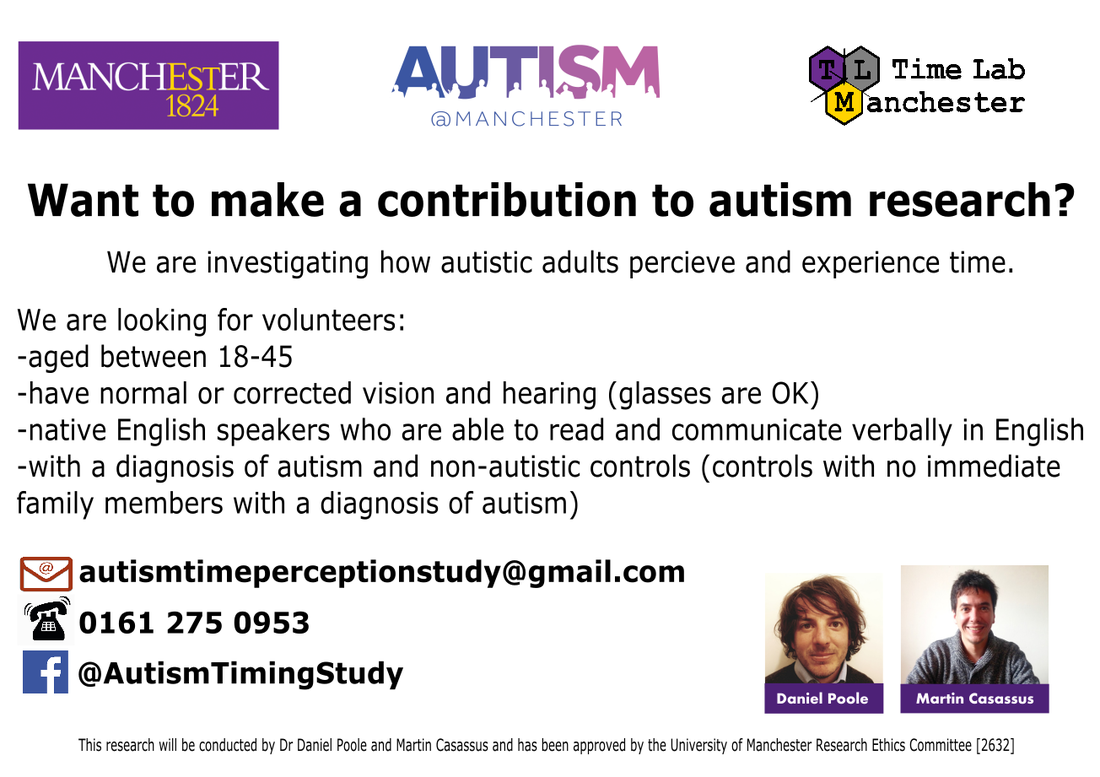
We have very exciting and welcome news: our Time Perception Lab has been awarded a three-year ESRC grant to investigate timing processes and behaviour in autism. The project brings together expertise from our Time Perception Lab, the BEAM Lab and the Manchester Autism Research Group.

The project will investigate timing from fundamental perceptual time discrimination through to higher-order concepts of time and temporality. Our lab member Dr Dan Poole will be the postdoctoral researcher on the project.

Recruitment materials for the ESRC-funded autism timing research
Back to 2017 ↑
Archive · 16 March 2017

Report on the Sound and Music Event at MOSI

Last night we attended the Sound and Music late event at the Museum of Science and Industry. The event was a great success, sold out with more than 450 people attending.

Dr Michelle Phillips (RNCM) and I (Dr Luke Jones) both gave a talk, alongside Peter Saville, founder of Factory Records. We ran two experiments. One examined how different kinds of music influence perceived duration: visitors listened to versions of a specially commissioned piece of music and estimated how long they lasted. The second explored people's mental imagery for time, asking them to draw their representation of a year, month, day and week.

We gave out cards promoting the lab and planned to share the results on the website. It was valuable to collect data from a wider population than undergraduate students, and a great opportunity to talk with the public about research at the Time Lab and the University of Manchester.

Presentation during public engagement at the Museum of Science and Industry
Back to 2017 ↑
Archive · 13 March 2017

Public outreach event at the Museum of Science and Industry: Sound and music

On Wednesday 15 March 2017 we are contributing to a public engagement evening at Manchester's Museum of Science and Industry (MOSI), including a talk by Factory Records founder Peter Saville and a silent disco.

Our lab director Dr Luke Jones and research collaborator Dr Michelle Phillips from the Royal Northern College of Music will give a talk and run two experiments. The first explores how properties of music affect perceived duration; the second explores mental imagery for days, weeks and months of the year.

We won't disclose too many details yet, but plan a full report on this blog after the event.

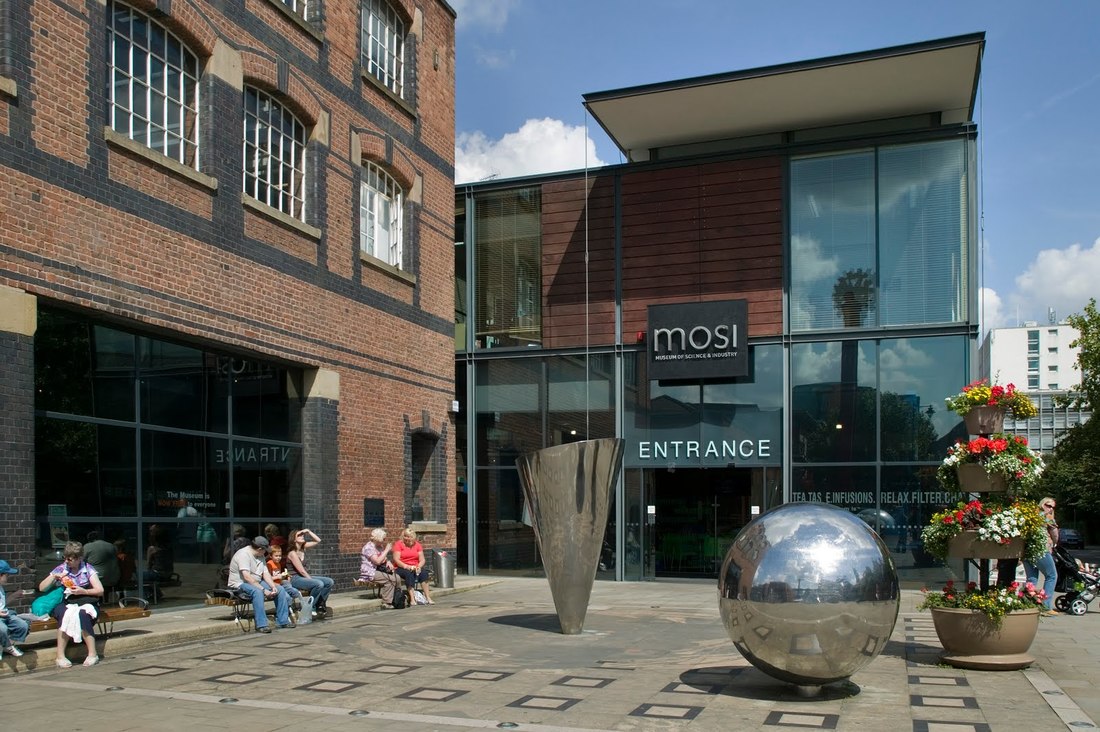
Museum of Science and Industry, Manchester
Back to 2017 ↑
Archive · 23 February 2017

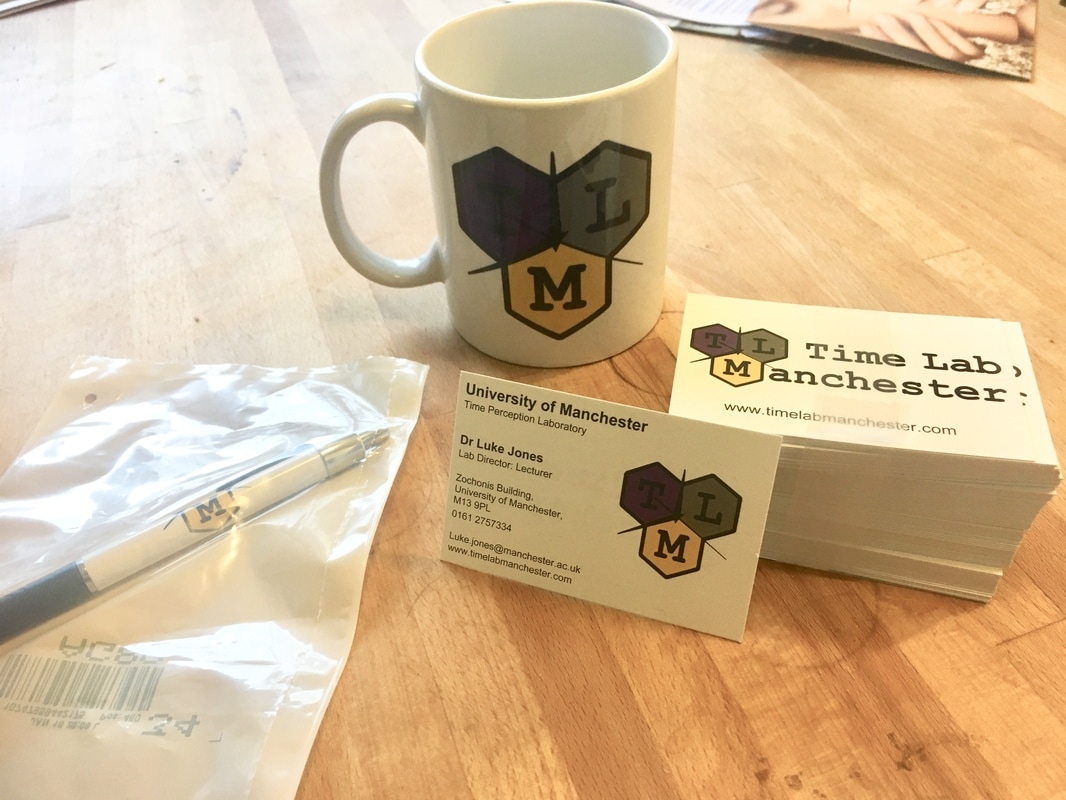
New Lab LOgo and promotional materials arrive

We now have a great new logo for the Time Lab, designed by our PhD student Emily Williams. We ordered business cards, a mug and a pen to test the design, and we're very pleased with how they turned out.

The hexagonal design is an homage to the bee, a symbol of Manchester and its industrial past; the colours come from the University of Manchester; and the clock hands explain themselves. Thanks, Emily!

Original Time Lab promotional materials featuring the TLM logo
Back to 2017 ↑
Archive · 10 January 2017

Merry christmas and a Happy new year!

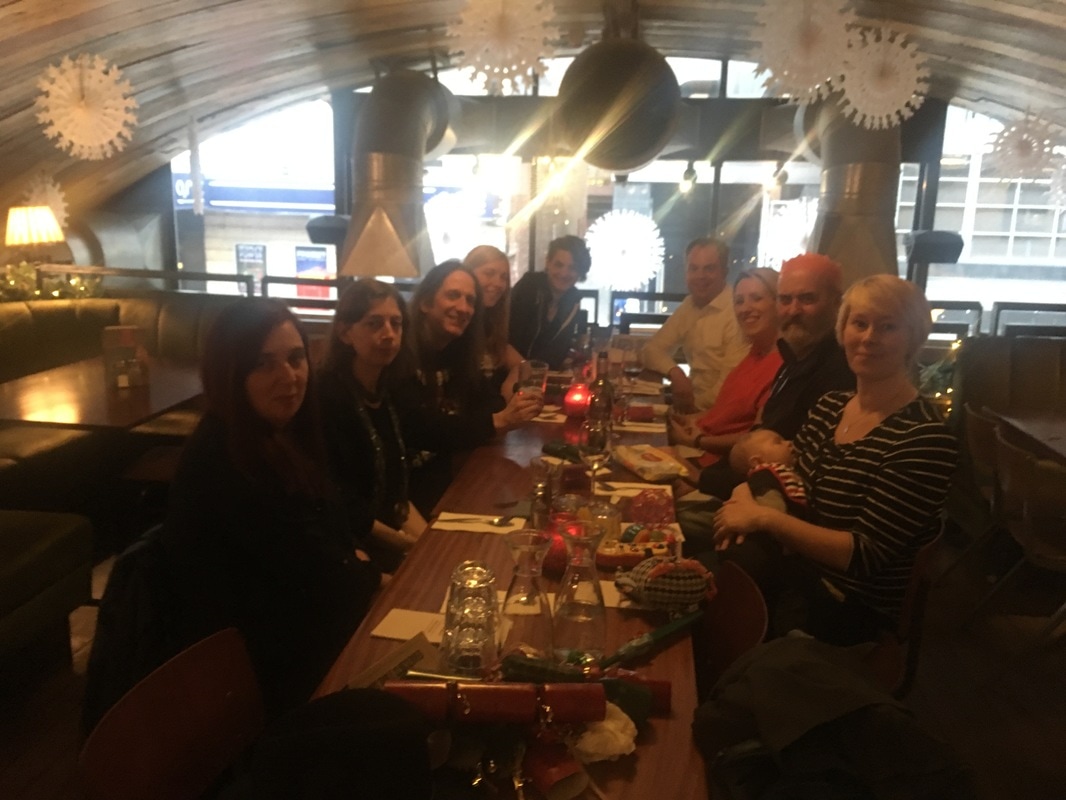
A Merry Christmas and a Happy New Year to all our followers from everyone at Manchester Time Lab! 2016 was a busy and successful year: we started a new collaboration with RNCM (Royal Northern College of Music), presented research at the EPS conference in Oxford, a Philosophy conference in Manchester and the Rock/Body meeting at the University of Exeter, and gained two new master's students and a PhD student in September.

The next event is an EPS workshop on time perception at the University of Liverpool next week. Just before the Christmas break we had our lab Christmas meal, which was lots of fun. Here's to an exciting and productive 2017!

Time Lab Christmas gathering, December 2016
Back to 2017 ↑
20169 posts
Archive · 16 September 2016

Conference Report: 'Rock/Body' at the University of Exeter

Rock/Body is an AHRC-funded project bringing together researchers in the humanities, social sciences, health and earth sciences, alongside artists, to investigate human relationships with geology. Our lab director Dr Luke Jones was invited to the meeting dedicated to Time and Duration.

The aim was to explore how people grasp (or fail to grasp) geological and cosmological timescales, sometimes called 'deep time'. This matters for policy-making: understanding evidence about climate change, planning around finite raw materials and anticipating technological developments including AI. It also matters for science communication and for teaching about the origins of the universe, stars and planets, and the processes of evolution.

There were talks and performances from geologists, writers, dancers, anthropologists, artists, museum directors and a psychologist from our lab. My (Luke's) talk explained psychological time perception and how our models might – or might not – apply to thinking about deep time.

It was a pleasure to attend such a meeting. Encounters between science and the arts are particularly useful for sharing ideas and developing new questions and perspectives.

Rock/Body interdisciplinary project
Back to 2016 ↑
Archive · 23 August 2016

Upcoming EPS WORKSHOP on Time PErception

A workshop on time perception, funded by the Experimental Psychology Society, will be held at Liverpool John Moores University on 19 January 2017. Details about submitting an abstract and applying to attend were available through the organisers; attendance is free but registration is required.

The Time Lab will be represented, and the conference is being organised by our collaborator Dr Ruth Ogden.

Back to 2016 ↑
Archive · 11 July 2016

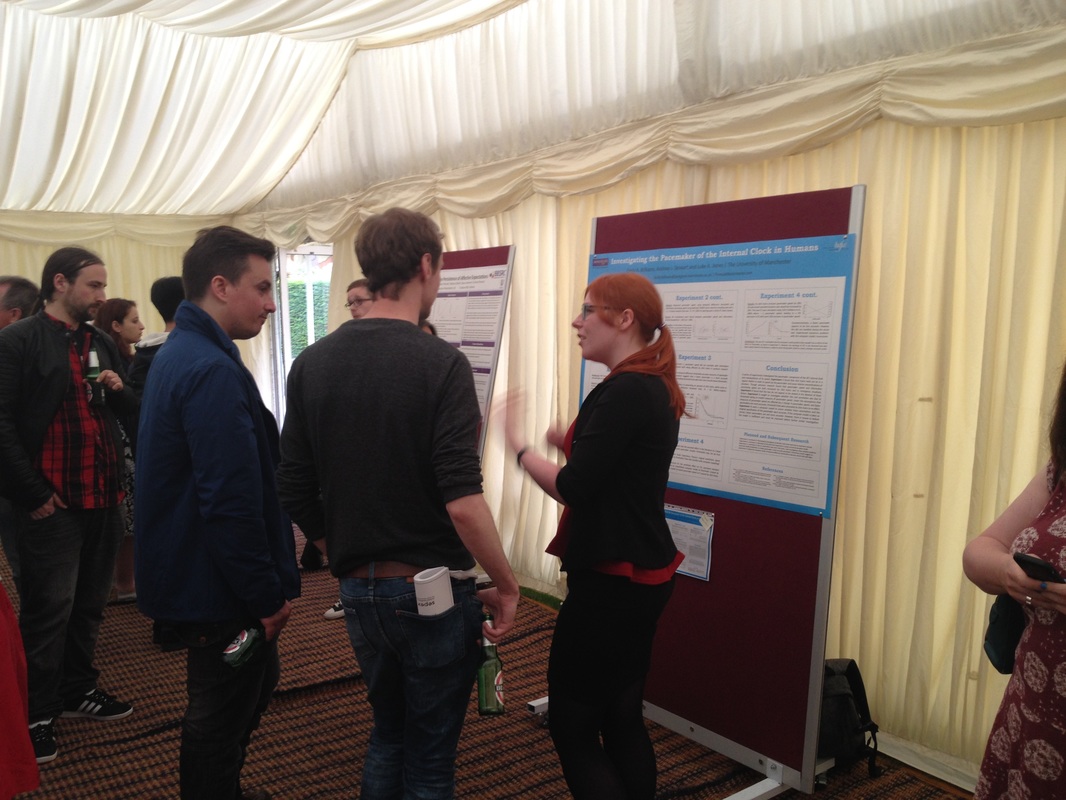
Conference Report: EPS Oxford

Back to rainy Manchester after a sunny few days in Oxford. The joint meeting of the Experimental Psychology Society and the Spanish Experimental Psychology Society (SEPEX) was held at St Anne's College, with up to three sessions running in parallel. Our lab was represented by Dr Luke Jones and PhD student Emily Williams.

One particularly interesting talk was given by Gabriela E. López-Tolsa (Universidad Nacional de Educación a Distancia, Spain) on adjunctive behaviour and the performance of rats in a temporal bisection task.

Emily's poster was very well received and generated considerable interest, including from Dr Peter Naish, co-author with Michel Treisman on some influential work on timing, and known for research on hypnosis. Many thanks to the organisers and to EPS for awarding Emily a Grindley Grant to attend.

Conference discussions at EPS Oxford
Back to 2016 ↑
Archive · 8 July 2016

Off we go to conference: Experimental PSychology Society at University of Oxford

This weekend our lab is represented at the Experimental Psychology Society conference at St Anne's College, University of Oxford.

Our PhD student Emily Williams will present a poster on her master's and PhD research into the pacemaker component of Scalar Expectancy Theory. It is Emily's first presentation at the EPS – a milestone in the career of an experimental psychologist.

Back to 2016 ↑
Archive · 21 June 2016

Time Conference at the University of Manchester PHILOSOPHY Department

On 13 June 2016 the Department of Philosophy at The University of Manchester convened a conference on the philosophy and psychology of time. Speakers included Dr Luke Jones from our lab. The talks were a fascinating and informative opportunity to compare philosophical and psychological approaches to human experience of time.

This reflects an exciting and growing tendency for philosophers of time and time-perception psychologists to work together. Many thanks to the Philosophy department for organising it.

The programme included Dr Luke Jones (Manchester), 'The Perception and Psychology of Time: An Overview'; Ms Abigail Connor (Manchester), 'Measuring Phenomenal Duration'; Professor Julian Kiverstein (Amsterdam), 'Is the Experience of Now a Neural Construct?'; Professor Barry Danton (Liverpool), 'Extensionalism: Variations and Challenges'; and Professor John Wearden (Keele), 'Some Philosophical Problems About Time Perception: How Psychology Might Help'.

Back to 2016 ↑
Archive · 10 June 2016

Data collection for Anxiety, Music and timing project with RNCM begins...

This week saw the start of data collection for a new collaboration between our lab and researchers at the Royal Northern College of Music (RNCM).

The project investigates the effects of performance anxiety on heart rate, musical performance and timing. We would like to thank all the piano students who volunteered to take part.

Royal Northern College of Music
Back to 2016 ↑
Archive · 25 May 2016

Manchester hosts North West Timing Meeting

On Thursday 19 May 2016 we hosted the North West timing meeting, bringing together researchers from Liverpool, Manchester and Keele. Thank you to everyone who came and made it a success. A productive series of discussions and presentations was followed by an excellent curry and pub session.

The meeting included members of our lab, Dr Ruth Ogden from Liverpool John Moores University, Professor John Wearden from Keele, Dr Michelle Phillips from the Royal Northern College of Music, and regional postdoctoral researchers and colleagues from Manchester's Philosophy department.

Some of our research interests overlap with those of the philosophers, and we have a joint meeting in the Philosophy department next month. More details to follow.

Back to 2016 ↑
Archive · 14 May 2016

our phd student Emily Williams featured on the Young Persons' university of Manchester blog

Emily recently featured on The University of Manchester's Young Persons University blog, explaining her research and time perception more generally.

The Young Persons University initiative was a widening-participation project for teachers and students in the community. It helped school pupils, college students, parents and teachers learn about studying different university subjects, the research being carried out and key ideas within various disciplines.

Back to 2016 ↑
Archive · 2 April 2016

Welcome to our new website!

Welcome to the new website for the time perception laboratory at the University of Manchester. Here you can read the latest news about our activities, find out about current and previous lab members, check our publications, and find information about opportunities to take part in research studies.

For background information about the lab, see our About page.

Back to 2016 ↑